Radon Testing in Rapid City

One number tells you whether the air in your home is something to fix or something to forget — and getting it is easier than you think. We test across Rapid City and the Black Hills, and we'll tell you straight when the free state kit is all you need.

Call (605) 600-8804
Short-term & long-term tests · Real-estate deadlines · Post-mitigation verification
ANSI/AARST-Standard Installs
Every Install Verified by Test
Local to the Black Hills

Book a Radon Test in Rapid City

Tell us whether you're under contract, checking the house you live in, or confirming a fix — we'll get a monitor placed quickly. Call (605) 600-8804 or send the form.

  • Calibrated monitors placed and retrieved by a pro
  • 48-hour turnarounds that fit inspection windows
  • A plain-English read on what your number means

Why Test a Rapid City Home for Radon

Because your senses can't help you and the zone map undersells this county, measuring is the only way to know where your home stands. Radon has no smell, no color, and no early symptoms — it's a radioactive soil gas, and the EPA ranks it as the leading cause of lung cancer among people who have never smoked.

Here's the local wrinkle. On the EPA's radon map, Pennington County is Zone 2 — predicted to average a moderate 2–4 pCi/L. The lab results disagree with the prediction: state test data has shown more than half of Pennington County tests coming back above the 4.0 pCi/L action level, the test-result average for county homes in the Air Chek lab dataset runs near 11.1 pCi/L, and recurring hot spots include Rapid Valley, Robbinsdale, and the neighborhoods south of the hospital. Individual Black Hills-area homes have measured above 100 pCi/L — one recorded near 1,000. None of that tells you what your basement reads, though. Two identical houses on the same block can test completely differently, which is exactly why measurement beats prediction.

Short-Term or Long-Term: Which Test Do You Need?

A short-term test answers "roughly where are we?" in a couple of days; a long-term test answers "what do we actually breathe over a year?" Both have a place in Rapid City.

Short-term tests run a minimum of 48 hours with the house closed up. They're the workhorse: fast enough for an inspection window, accurate enough to decide whether to act, and the format used to verify a brand-new mitigation system. If you're under contract, or you've simply never tested, start here.

Long-term tests stay in place 90 days or more and average out the swings. Radon isn't constant — it rises and falls with the weather, the season, and how buttoned-up the house is. South Dakota's long winters, when homes stay sealed for months on end, are when indoor levels typically peak, so a long-term test that spans heating season gives the truest picture of annual exposure. It's the right call when a short-term result lands in the 2–4 gray zone, or when you have the patience for the best possible data.

The Free State Kit vs. a Professional Test

Let's start with the honest version: South Dakota will help you test for free, and you should take the state up on it. The DANR distributes 500 free short-term test kits to residents each year — statewide, first come, first served. If you've never tested and there's no deadline attached, request a kit, follow the closed-house instructions to the letter, and mail it back promptly. We would genuinely rather you test free than not test at all.
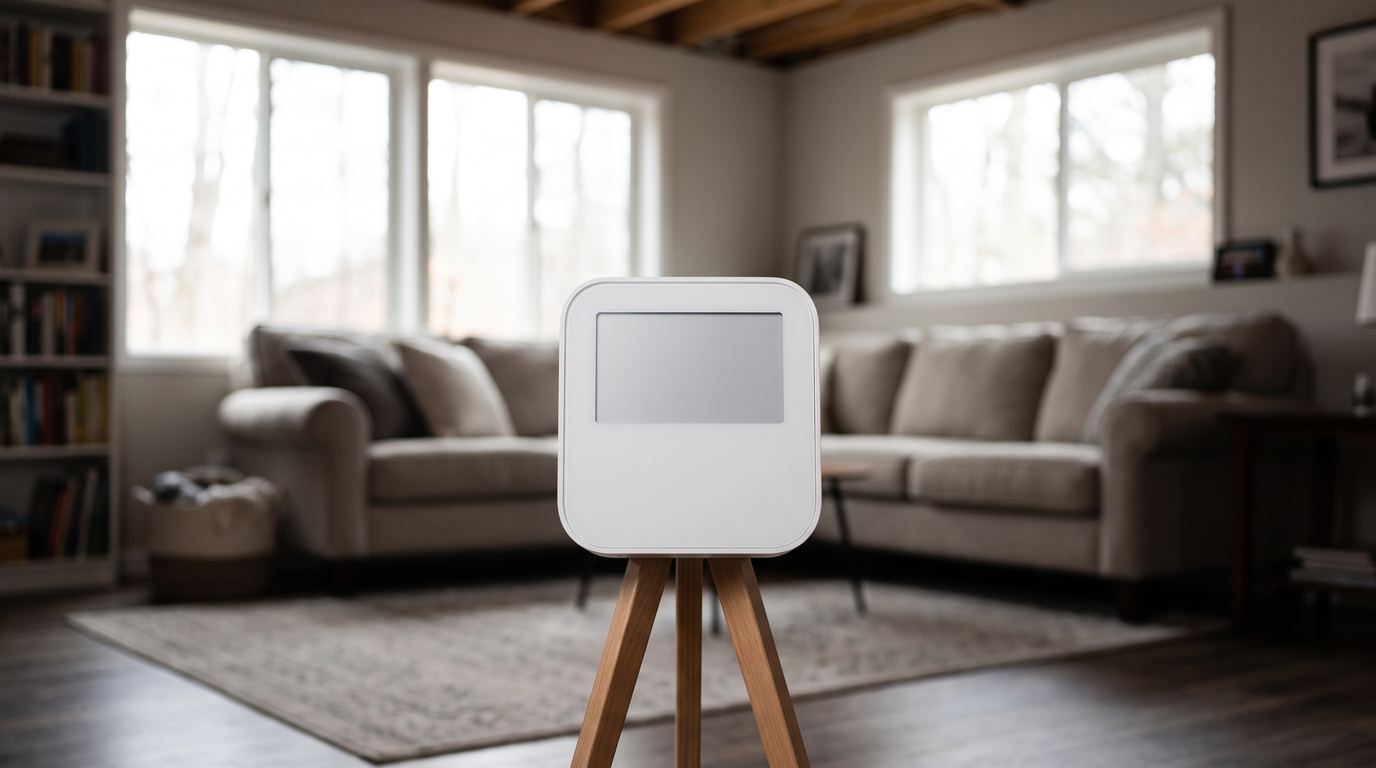
Continuous radon monitor in place
CRM unit on a stand in a tidy basement, manometer-style display visible, soft daylight. No faces, no branding.

A professional test earns its fee in three situations:

  • A real-estate deadline. Free kits are first-come and mail-in; a closing can't wait on either. We place a monitor, run the 48 hours, and report inside your inspection window.
  • A result someone else has to accept. A continuous radon monitor (CRM) logs hourly readings and produces a tamper-resistant report a buyer, seller, or relocation company can rely on — something a mailed charcoal kit can't offer.
  • Post-mitigation verification. After a system goes in, the follow-up test is the proof it worked. Ours is built into every install.

What Your Result Means

Radon is reported in picocuries per liter of air (pCi/L), and the EPA draws its action line at 4.0. Here's how to read the report:

One caveat we'll always give you: a 48-hour result is a snapshot, not a verdict. A number that lands near the line deserves a second test before anyone spends money — in either direction. We'll tell you which situation you're in, even when the honest answer is "you don't need us yet."

The Closed-House Rules That Make a Test Valid

A radon test is only as good as the conditions around it, and the DANR protocol is specific. Keep every window and exterior door closed for 12 hours before the test begins and for its entire run — normal coming and going through a door is fine; airing the house out is not. Place the detector in the lowest level of the home you use, and position it:

Skip the furnace room, the bathroom, and drafty spots near vents. Otherwise, live normally — cook, run the furnace or the AC, come and go. When we run the test, we handle placement and retrieval and document the conditions, so the result stands up to scrutiny later.

Testing When the House Is Under Contract

Real-estate testing is its own discipline: the 48-hour clock has to fit inside the inspection window, the result has to be one both sides trust, and a high number needs a priced answer instead of a panic. We schedule around closings, coordinate with agents, and when mitigation is needed we can usually quote it the same day the result lands. The full playbook — South Dakota's disclosure form, who pays in practice, and pre-closing timelines — lives on our radon and real estate page.

Know the Number Before It Matters

Whether it's peace of mind or a closing on the calendar, we'll get a monitor placed this week and explain the result in plain English.

(605) 600-8804

If Your Number Comes Back High

Take it seriously — but don't lose sleep over it. An elevated result is one of the most common findings in Pennington County, and it's completely fixable. The path is short: confirm the reading if it came from a single mailed kit, get a firm written mitigation quote based on your foundation, and have the system installed — typically one visit of three to five hours. An active sub-slab system pulls the gas from beneath the slab and vents it above the roofline, and a follow-up test verifies the level dropped below 4.0 pCi/L before the job is called done.

Start with our radon mitigation overview to see how the fix works, or check real Rapid City pricing on the cost page. Or skip the reading and call — we'll walk through your exact result and what it does and doesn't mean.

Radon Testing FAQ

How long does a radon test take?

A short-term test needs a minimum of 48 hours under closed-house conditions — that's the version used for most home sales and first looks. A long-term test runs 90 days or more and captures your true year-round average, which matters in South Dakota because levels climb during our long, sealed-up winters.

Is the free South Dakota test kit any good?

Yes — and we'd rather you use one than skip testing. The South Dakota DANR distributes 500 free short-term kits to residents each year, first come, first served. Follow the closed-house instructions carefully and mail it in promptly. Bring in a professional when a home sale needs a defensible result on a deadline, or when you're verifying that a mitigation system worked.

Where in the house should a radon test be placed?

In the lowest level of the home you use, following the DANR placement rules: at least 20 inches above the floor, 3 feet from windows, 12 inches from exterior walls, and 4 inches from other objects. Keep windows and exterior doors closed for 12 hours before the test starts and for its entire run.

Do homes without basements need testing too?

Yes. Radon enters wherever a house touches soil — slab-on-grade floors and crawl spaces included. Basements concentrate it, which is part of why basement-heavy Rapid City tests high, but elevated results show up in every foundation type. A home's age or style can't tell you the number; only a test can.

What should I do if my radon test is above 4.0 pCi/L?

Confirm it, then fix it. If the first result came from a single mailed kit, a follow-up test or a professional monitor verifies the number. From there, an active sub-slab depressurization system reliably brings even double-digit levels below 4.0 pCi/L — usually in a single visit of three to five hours — and a post-mitigation test proves it worked.

Tap to Call — (605) 600-8804