How Much Does Radon Mitigation Cost in Rapid City?

Nobody else around here publishes radon pricing, so we will: the real ranges, what pushes a quote up or down, and how to judge a bid in a state that doesn't license this work.

Call (605) 600-8804
Firm written quotes · Verification test included · No sales visit required
ANSI/AARST-Standard Installs
Every Install Verified by Test
Local to the Black Hills

Get Your Exact Number in Writing

Send your test result and foundation type — basement, slab, or crawl space — and we'll turn it into a firm price. Call (605) 600-8804 or use the form.

  • The quote you see is the price you pay
  • No add-ons invented once we're on site
  • Every install ends with a verification test

The Short Answer

A standard single-suction sub-slab radon system in the Rapid City area typically costs about $1,200 to $2,500 installed. The South Dakota DANR pegs the statewide average installation near $1,200. Crawl spaces, multiple suction points, and large finished basements push the price higher; your firm number comes from a look at your foundation.

Last updated July 2026 · Ranges reflect typical residential installs in the Rapid City area.

Rapid City Radon Mitigation Prices by System Type

Every house gets one of a few system designs, and the design is what sets the price. The ranges below are typical for the Rapid City area; the right-hand column tells you when each one applies.

System typeTypical costWhen your house needs it
Single-suction sub-slabAbout $1,200 – $2,500 installedOne pipe cored through the basement or slab floor, one fan, discharge above the eave. Fits most homes in the area.
Crawl-space sub-membraneAbove the standard range — quoted after inspectionA heavy liner sealed across the crawl-space floor with suction drawn from beneath it; more material and labor than a slab job.
Multi-suction or combinationUpper end of the range and beyondLarge footprints, additions on separate slabs, or tight soil that a single suction point can't depressurize.
Passive-to-active conversionTypically less than a full new systemA builder-installed passive stack gets a fan and wiring so it actually pulls — common in newer construction.
Radon fan replacement$145 – $300 for the fan, plus laborThe fan is the wearing part of any system; average life is about 11 years. The piping stays.
Post-mitigation verification testIncluded with every installConfirms the number actually dropped below 4.0 pCi/L before we close the job out.

Most Rapid City homes — a basement, decent gravel under the slab, one suction point — land in the first row. The rest of the table exists because foundations differ, and a quote should reflect your house rather than a one-size menu.

What Moves the Price Up or Down

The question a quote really answers is: how hard is it to depressurize the soil under this particular house? A handful of factors do most of the deciding:
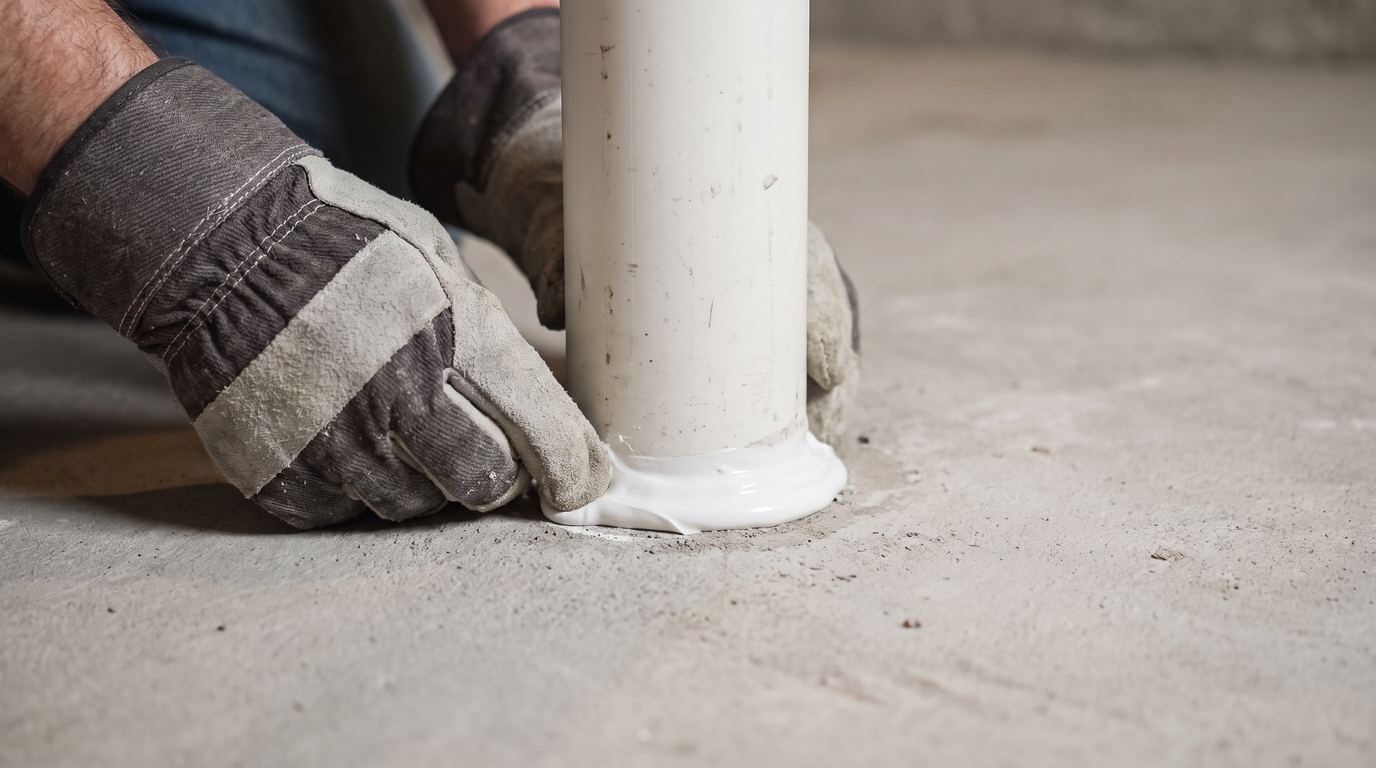
Suction point cored through a slab
Close-up of a sealed pipe penetration in basement concrete, clean work area, anonymous gloved hands only.
  • Foundation type. A poured basement or slab is the most direct install. A crawl space means membrane work, and a home with both — not unusual around Rapid City — may need a combination system.
  • Finished basements. Finished space limits where pipe can run and how we reach the slab, adding routing and finish protection to the job.
  • Number of suction points. If air moves freely through the fill under your slab, one point covers the house. Compacted or tight soil, or a big footprint, can take two or three — each adds coring, pipe, and time.
  • Fan class. Tight sub-slab material needs a stronger fan to hold vacuum, and a step up in fan class nudges the total.
  • Discharge routing. A straight exterior run up the least-visible wall is the economical route; threading pipe through a garage or interior chase for a cleaner look costs more in labor.

Two same-year houses on the same street can quote differently because of what's under the concrete. That's why we price from your actual foundation — and why the number we give you holds.

What a System Costs to Run

Roughly $3 a month — that's the DANR's own operating figure for a radon fan in South Dakota, even though the fan runs around the clock. Continuous operation is the point: the fan keeps the soil under your home at lower pressure than your living space, and it does it for about what a light bulb draws. As safety equipment goes, it's among the cheapest a house can carry.

The long-term line item is the fan itself. Average lifespan runs about 11 years, and when one wears out the fix is a $145–$300 replacement fan plus the labor to swap it — not a new system. The pipe, the sealing, and the manometer all stay. If your fan has gone quiet or the U-tube gauge reads level, our repair and fan replacement service handles any brand, whoever installed it.

Why the Cheapest Bid Isn't Always the Cheapest

Here's something most homeowners don't know: South Dakota doesn't license radon contractors. No state exam, no required certification, no inspector signing off — anyone with a drill and a fan can call themselves a radon company tomorrow. That's not a scare line; it's the regulatory reality, and it explains why bids for the "same" job can look wildly different.

A low bid can be low because your house is simple — or because the bid quietly skips the steps that make a system work: no diagnostics before coring, an undersized fan, sump lids and slab cracks left unsealed, no follow-up test. A pipe on the wall that leaves your level above 4.0 pCi/L didn't save you money; it doubled your cost, because now someone has to fix the fix. Whoever you hire — including if it isn't us — get three answers in writing: Is the work built to the ANSI/AARST standards? What diagnostics happen before the price is set? And is a post-mitigation verification test included? The national certifying bodies, NRPP and NRSB, exist precisely because the state stays out of it — voluntary standards are the only floor this market has, so insist on them.

Your Foundation, Your Price — in Writing

Tell us your test result and what's under your house, and you'll have a firm number to plan around today. No visit, no pressure.

(605) 600-8804

What's Inside Our Quote

The number we give you buys a finished, verified system — not an entry price that grows on install day. Every standard job covers:

Installation is normally a single visit of three to five hours, and you don't have to leave the house. Haven't tested yet? Start with radon testing — South Dakota even offers free kits. And if the high number showed up mid-transaction, our radon and real estate page covers pre-closing timelines and who usually pays.

Radon Mitigation Cost FAQ

What does radon mitigation cost around here?

In the Rapid City area, a standard single-suction sub-slab system typically runs about $1,200 to $2,500 installed, and the South Dakota DANR puts the statewide average installation near $1,200. Crawl-space, multi-suction, and large finished-basement homes come in higher. The only way to get your exact number is a written quote based on your foundation.

Why do radon quotes vary so much in South Dakota?

Partly because homes vary — and partly because contractors do. South Dakota doesn't license radon work, so there's no floor under quality: one bid may include diagnostics, sealing, and a verification test while another is a fan on a pipe. Compare what's in the bid, not just the number at the bottom, and insist on ANSI/AARST-standard work with a follow-up test in writing.

How much does it cost to run a radon fan?

About $3 a month in electricity, per South Dakota DANR figures — the fan draws roughly what a light bulb does even though it runs 24/7. Fans last about 11 years on average, and a replacement runs $145 to $300 for the fan, plus the labor to swap it.

Will homeowners insurance pay for radon mitigation?

Generally no. Policies treat a radon system as a home improvement rather than sudden, accidental damage, so it isn't a typical claim. In a home sale, though, the cost is often negotiated between buyer and seller — see our radon and real estate page for how that usually plays out.

Is a crawl-space radon system more expensive?

Usually, yes. A crawl space can't be depressurized like a slab, so we lay and seal a heavy membrane across the floor and draw suction from beneath it — sub-membrane depressurization. The extra material and labor put it above the standard sub-slab range. We quote it firm after seeing the crawl space.

How long does a radon system last?

The piping is effectively permanent; the fan is the wearing part, with an average life of about 11 years. When a fan quits, the fix is a $145–$300 replacement fan plus labor — not a new system. A glance at the U-tube manometer on the pipe tells you at any moment whether the system is pulling.

Tap to Call — (605) 600-8804