Manometer gone flat, a fan that's suddenly loud, or a re-test that crept back up? We diagnose and repair radon systems across Rapid City and the Black Hills — no matter who installed them — and re-test to prove the fix.
Call (605) 600-8804Tell us what the system is doing — dead fan, new noise, or a number that won't stay down — and we'll tell you what's wrong and what the fix costs. Call (605) 600-8804 or send the form.
A radon system fails silently. The gas it manages has no smell, no color, and no symptoms you'd notice week to week, so a dead system can sit there looking perfectly normal for months while levels climb back to where they started. That's why every properly built system carries a gauge you can read at a glance — and why an occasional re-test is part of owning one. Watch for these:
Any of these sound familiar? The repair is usually far smaller than homeowners fear. A fresh radon test is often step one, so we know the actual number we're chasing before we touch the hardware.
The fan is the one moving part in the whole system, which makes it the part that eventually wears out. It runs around the clock, frequently pulling damp soil air, and the DANR's published figures set expectations well: a typical lifespan of about 11 years, a replacement unit at $145 to $300 plus the labor to swap and seal it, and an operating cost of only about $3 a month once it's spinning again. When a fan dies, radon starts rebuilding in the house within a day or two — it's a repair worth scheduling now, not next season.
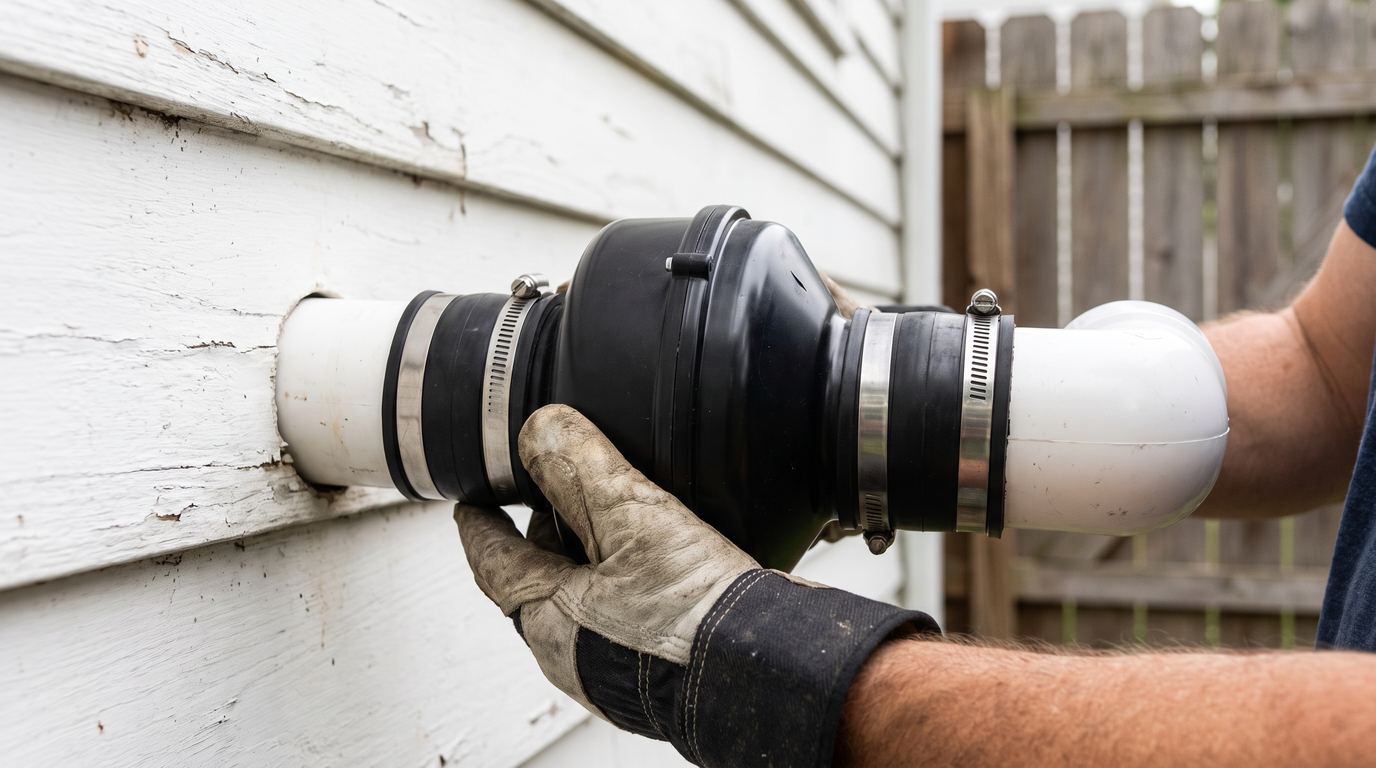
A fan replacement with us covers more than the swap:
One honest note: a fan that keeps burning out early is often a symptom, not the disease — an undersized or oversized unit fighting the wrong pipe layout. If that's what we find, we'll tell you and price the correction, rather than selling you the same failure again in a few years.
A lot of newer homes come with a passive radon rough-in: a pipe run from beneath the slab up through the roof during construction, capped off with no fan attached. It relies on natural airflow alone — and at the radon levels common around here, natural airflow alone frequently isn't enough. With the construction pace in Box Elder and Summerset, we see these builder stubs constantly, and the owners usually discover the gap the first time they actually test the finished house.
The conversion is the easy version of a mitigation job, because the expensive part — the pipe route — already exists. We install a correctly sized inline fan on the existing stack, seal the slab penetrations and sump as needed, add a manometer so you can monitor it forever after, and run a post-mitigation test to verify the result. It's typically faster and cheaper than building a system from nothing. The same logic applies to older active systems that were never quite right: we'd rather tune what you own — another suction point, a better fan, honest resealing — than start you over.
We repair and re-verify radon systems regardless of who built them. That matters more in western South Dakota than most places: plenty of local systems were installed by statewide outfits based hours east, by franchise crews routed through town, or by companies that have since folded. When that fan quits, "call your installer" is not a useful answer. You don't need the original company — you need someone local who will show up, and we work Rapid City, Box Elder, Rapid Valley, Black Hawk, Summerset, Piedmont, and Sturgis every week.
When we take on an existing system, we inspect the full chain — suction point, pipe routing, sealing at the slab and sump, fan, manometer, and discharge — and give you a straight read: fix a part, rework a section, or leave it alone because it's fine. You get a written price before we start, and we confirm permit requirements with the City of Rapid City or Pennington County before work begins. And because South Dakota doesn't license radon work, our standard is the national one: every repair is brought to ANSI/AARST standards and every repair ends with a re-test. A radon fix you can't verify is a guess — we don't leave guesses behind. Wondering what repairs run? The cost guide covers fans, labor, and full systems.
Whether it's a dead fan, a mystery noise, or a re-test you didn't like, tell us what your system is doing and we'll tell you what it needs, with a firm price today.
(605) 600-8804The South Dakota DANR puts the typical radon fan lifespan at about 11 years of continuous duty, though moisture and workload move that in both directions. The fan itself usually costs $145 to $300, plus labor to swap it, and a running fan costs only about $3 a month in electricity. The surest sign yours has quit is the manometer: when the two liquid columns in that U-shaped gauge sit level, the fan is no longer pulling and it's time to replace it.
Don't rip the system out — diagnose it. A system that runs but can't get under 4.0 pCi/L usually has a design or sealing problem: too few suction points for the foundation, a fan too weak for the soil, an open sump or slab crack letting the fan pull house air instead of soil gas, or an untreated crawl space section feeding the rest of the home. We find where the suction is going, correct it — reseal, add a point, or upgrade the fan — and re-test to prove the number came down.
A healthy system is quiet enough to forget. A hum, rattle, or grind that wasn't there before usually means fan bearings wearing out, a fan mismatched to the pipe, or missing vibration isolation at the mount; gurgling points to condensation pooling in a low spot of the pipe. All of these are fixable, and often the cure is a correctly sized replacement fan or a corrected mount rather than a new system.
Test first, but be prepared: passive builder stubs frequently can't keep up with the radon levels we see around Rapid City, and many owners find that out on their first test. The good news is the hard part is already built. We add a correctly sized inline fan to the existing pipe, seal what needs sealing, mount a manometer, and verify with a post-mitigation test — typically faster and cheaper than installing a system from scratch.
Yes — any brand, any installer, including companies that work out of the other side of the state or no longer exist. We inspect the pipe route, fan, sealing, and manometer, then tell you plainly whether it needs a part, a rework, or nothing at all, with a written price before any work starts. Every repair ends with a re-test so you know the fix actually fixed it.