Established neighborhoods, deep basements, rural acreage — Sturgis homes have character, and character homes deserve a straight radon answer. We test, fix, and prove the result.
Call (605) 600-8804Tell us your test result, your foundation type, and whether you're in town or out in the county — we'll price it firm by phone. Call (605) 600-8804 or send the form.
Sturgis sits about 30 minutes northwest of Rapid City, and it's firmly inside our working territory — close enough that a test, a quote, or a single-visit install schedules like a local job, because to us it is one. The world knows this town for one loud week in August; the other fifty-one weeks are what this page is about: established neighborhoods, older housing stock, and the basements underneath it.
The radon picture here is the Black Hills picture. The EPA and USGS map a high-radon-potential ridge around the Hills, where uranium-bearing granite and metamorphic rock feeds a steady decay chain — uranium to radium, radium to radon gas — and roughly half of tested South Dakota homes come back above the EPA action level of 4.0 pCi/L. American Lung Association analyses have ranked the state among the very highest in the nation for elevated tests. What that means for a Sturgis address is simple and undramatic: test, read the number, and act on what it says. The geology behind it →
Sturgis's older housing stock changes the mitigation work in a specific way. Age doesn't create radon — the ground does that — but decades of settling give the gas more ways into a basement: hairline slab cracks that have widened, sump pits that were never sealed, and crawl-space additions stitched onto the original foundation over the years.
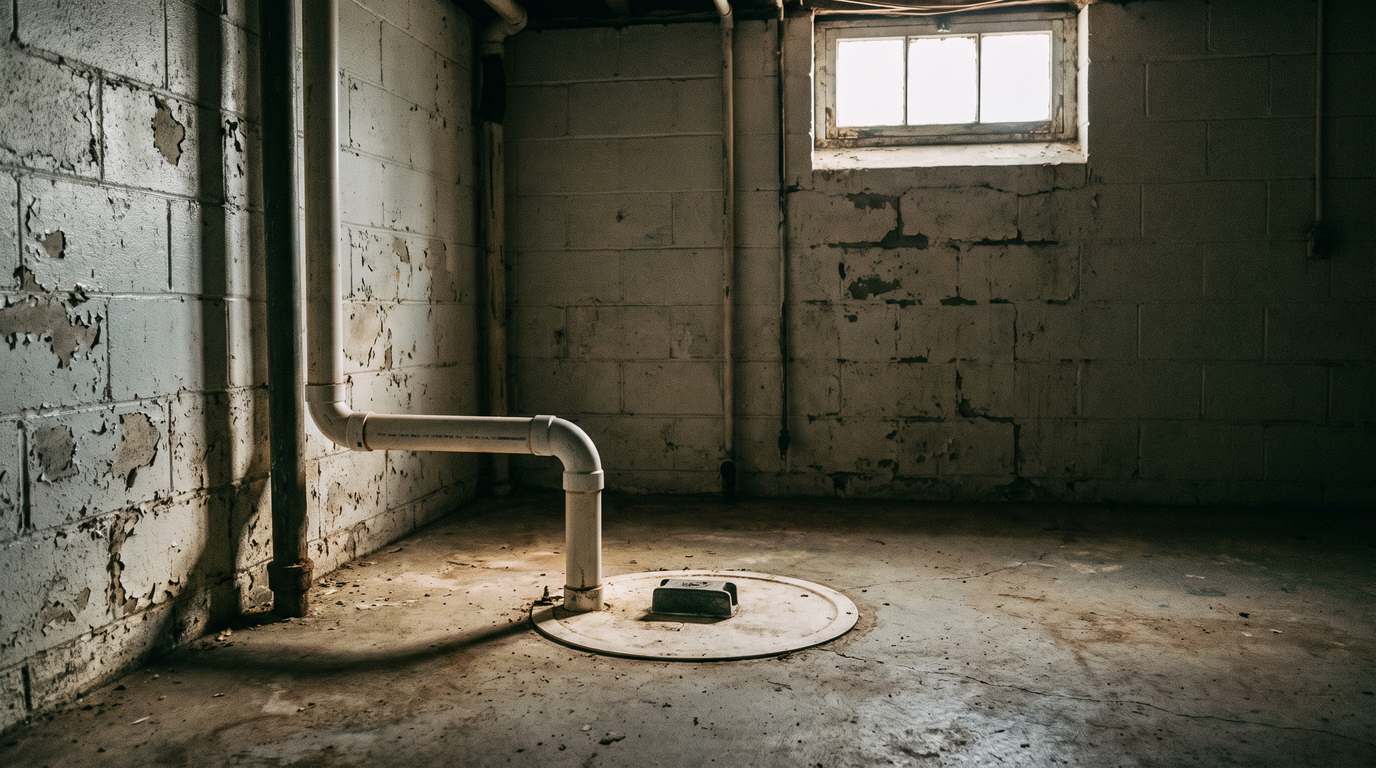
What that means when we design a system for an older Sturgis home:
The finish is the same as any job we do: an active system built to ANSI/AARST standards and a verification test proving the number dropped.
We serve the neighborhoods in town and the rural Meade County properties around Sturgis alike. Country places bring their own variables — foundations built in stages, crawl spaces under additions — and the honest approach is the same one we use everywhere: look at the actual foundation, then quote it firm and in writing.
If you're not under any deadline, start cheap: the South Dakota DANR distributes 500 free short-term test kits to residents each year, first come, first served. Run one for at least 48 hours with the house closed up — winter, when a South Dakota house stays sealed for months, is the most honest season to test. If a sale is in motion, timing tightens: our radon and real estate page covers what South Dakota's seller disclosure form requires and how mitigation fits a closing. Either way, a standard system here runs about $1,200–$2,500 installed (full cost breakdown), goes in over a single visit, and costs about $3 a month to run.
Call for a straight answer about your Sturgis home or acreage — what to test, what a fix costs, and how fast we can verify the result.
(605) 600-8804Not automatically — the radon under a house is set by the ground, not the build date. But older foundations tend to offer the gas more ways in: settled slab cracks, open sump pits, and crawl-space additions. That doesn't raise the source; it eases the path. The only way to know what your house reads is a 48-hour test under closed-house conditions.
Yes — Sturgis is about 30 minutes northwest of our Rapid City base, and it's part of our regular working territory, not an occasional exception. Quotes happen by phone, installs happen in a single visit of about three to five hours, and the drive doesn't change the price structure: firm, written pricing before we start.
Yes. We serve nearby rural Meade County properties along with homes in town. Rural places often mean well pits, crawl spaces, or additions built in stages, so we diagnose the foundation before quoting and design the system for what's actually there — including sub-membrane systems where they fit. Every install still ends with a post-mitigation verification test.
A standard single-suction sub-slab system in this area typically runs about $1,200 to $2,500 installed — the South Dakota DANR puts the statewide average around $1,200. Older homes that need extra sealing or a crawl-space membrane run higher. You get a firm, written price after we see the foundation — see the cost page.