New house, new orders, or a lender asking for a radon number? We test and mitigate homes across Box Elder — including brand-new construction — and we prove the level came down.
Call (605) 600-8804Tell us your test result — or your closing date — and your foundation type, and we'll give you a firm price with no sales visit. Call (605) 600-8804 or send the form.
Box Elder homes need radon attention for one simple reason: radon comes out of the ground, and no construction date changes what's underneath a foundation. Home to Ellsworth Air Force Base, Box Elder has become one of the fastest-growing cities in South Dakota as the base expands around its B-21 mission — which means whole streets of houses newer than the appliances inside them. Plenty of those houses still open a radon report with a number at or above the EPA action level of 4.0 pCi/L.
The source is geological, not structural. Uranium in the region's rock and soil decays into radium and then into radon gas, which works upward through slab cracks, sump pits, and utility penetrations into whatever sits above — a decades-old basement or a slab poured last spring. Modern builds are often sealed tighter for energy efficiency, which helps your heating bill but does nothing to stop soil gas at the foundation. Statewide, roughly half of tested South Dakota homes come back above the action level, and a new address in a new subdivision buys no exemption. The only way to know where your house stands is a test — here's how we run them.
For the families filling Box Elder's newer neighborhoods and the Douglas School District, radon usually shows up at one of two moments: on an inspection report in the middle of a purchase, or on a test taken once the boxes are unpacked. Either way, the fix is the same — and it's permanent.
Many newer Box Elder homes were built with a passive radon rough-in: a vertical PVC pipe running from beneath the slab up through the roof, usually hidden in a closet or garage wall. That pipe is a head start, not a finished system — passive systems rely on natural airflow alone, and a house over strong soil-gas pressure can still test high with one in place.
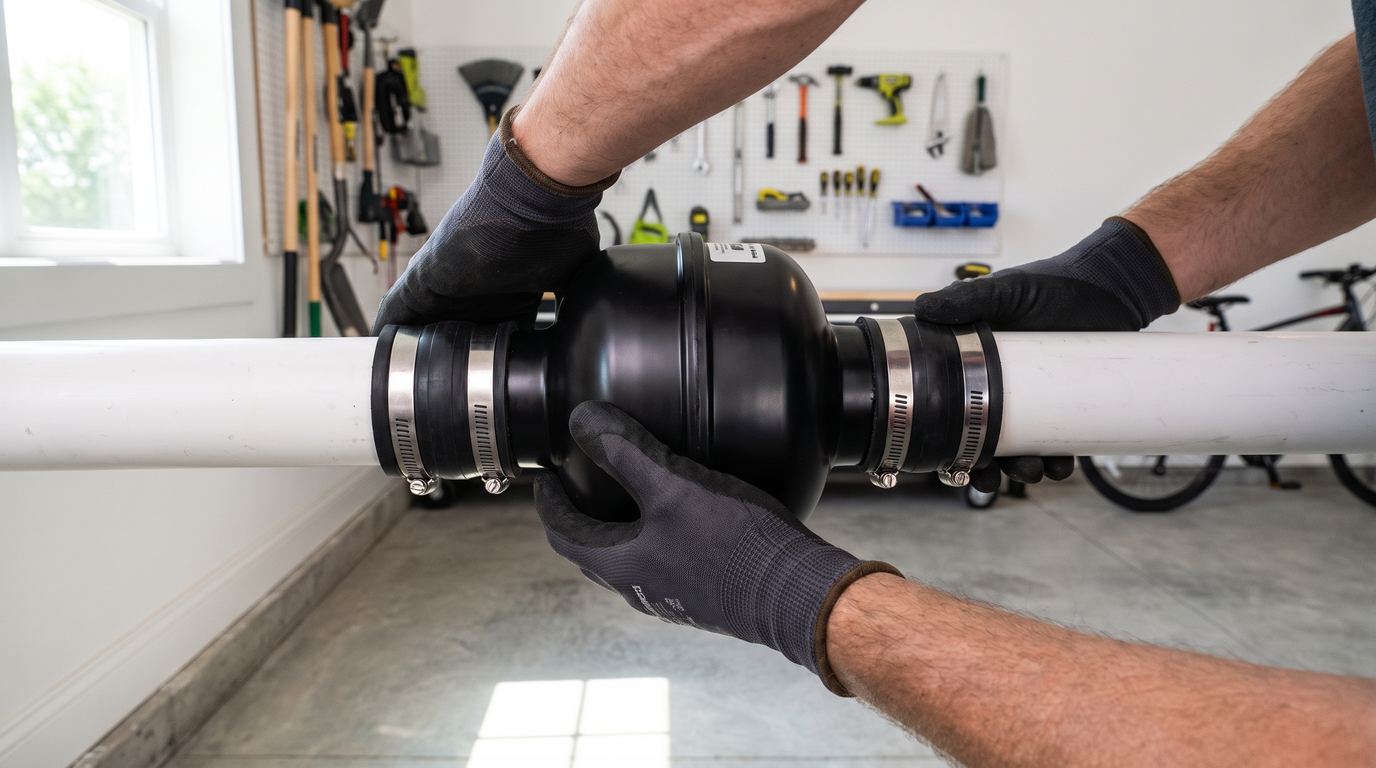
Converting a passive stub to a working active system is the most common job we do in newer construction:
Because the piping already exists, conversions usually cost less than a from-scratch install. See what drives pricing →
Box Elder runs on move dates — report deadlines, closings, possession dates, household-goods deliveries. Radon work fits into that schedule better than most people expect. A defensible short-term test takes a minimum of 48 hours under closed-house conditions, and a mitigation install is normally a single visit of three to five hours, finished with a verification test.
Many lenders, relocation programs, and buyers' inspectors ask for radon testing in this market, so if you're buying or selling here, it's worth getting ahead of rather than reacting to. We coordinate directly with agents and inspectors so the deal keeps moving — our radon and real estate page covers what South Dakota's disclosure form asks of sellers. And if there's no deadline in play, we'll say so honestly: the South Dakota DANR gives away 500 free short-term test kits to residents each year, and a free kit is a perfectly good first step.
Whether an inspector flagged it or you just want it off your mind before the furniture's unpacked, call and we'll walk you through costs, timelines, and whether you need us at all.
(605) 600-8804They can, and some do. Radon comes from uranium decaying in the soil and rock under the foundation, so the age of the house above it doesn't matter. Statewide, roughly half of tested South Dakota homes come back above the EPA action level of 4.0 pCi/L, and new construction is not exempt. A short-term test — minimum 48 hours — is the only way to know your house's number.
Sometimes, but you shouldn't assume it. A passive system is just a pipe with no fan — it relies on natural airflow alone. If a test still shows 4.0 pCi/L or higher, we convert it to an active system by adding a correctly rated inline fan and a manometer, sealing the details the rough-in missed, and verifying the result with a follow-up test. Because the piping already exists, conversion is usually simpler and less expensive than a from-scratch install.
Yes. Move and closing timelines are our normal work, not an exception. A professional short-term test needs a minimum of 48 hours, mitigation typically installs in a single visit of three to five hours, and every install ends with a verification test. Tell us your report deadline or possession date and we'll build the schedule backward from it.
A standard single-suction sub-slab system in the Rapid City area, including Box Elder, typically runs about $1,200 to $2,500 installed — the South Dakota DANR puts the statewide average around $1,200. Passive-to-active conversions often come in lower because the piping already exists. You get a firm, written price after we see the foundation. See the full cost breakdown.